Creatibase
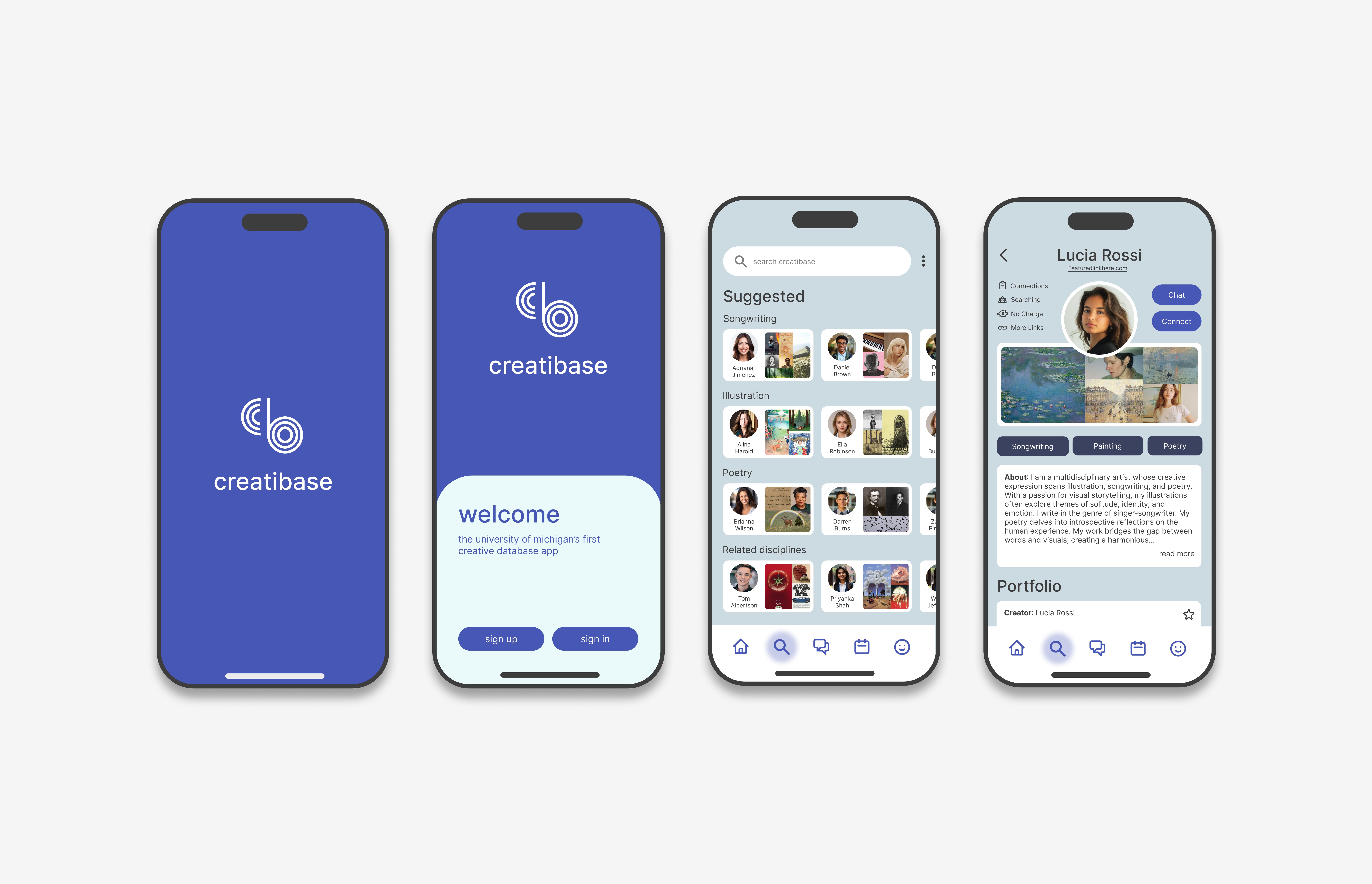
Creatibase is a creative database networking app for University of Michigan student creatives that aims to make other creatives more accessible and collaborations more achievable.
Topic
Creative database networking app for University of Michigan students
Problem
The University of Michigan lacks a shared 'third space' for creative collaboration. While renowned for research, athletics, and public health, art remains an underdeveloped area, with only about 2% of students majoring in art and design.
Vision Statement
Create an enticing networking space for creative individuals at the University of Michigan in order to make creatives more accessible and collaborations more achievable.
Competitive Analysis
I researched networking apps focused on collaboration and business. I analyzed home feeds, search filters, and chat features. LinkedIn often overwhelms users with sponsored content, while Behance’s multiple feeds can make searching difficult. Both highlight the value of strong search filters. Networking apps would benefit from simplicity and a clear focus on connecting users effectively.
Survey/Interviews
I interviewed University of Michigan creatives about networking needs. Many find it hard to connect with creatives outside their discipline unless they are part of a multidisciplinary club. They want an easier way to discover collaborators and maintain connections.
User Flow
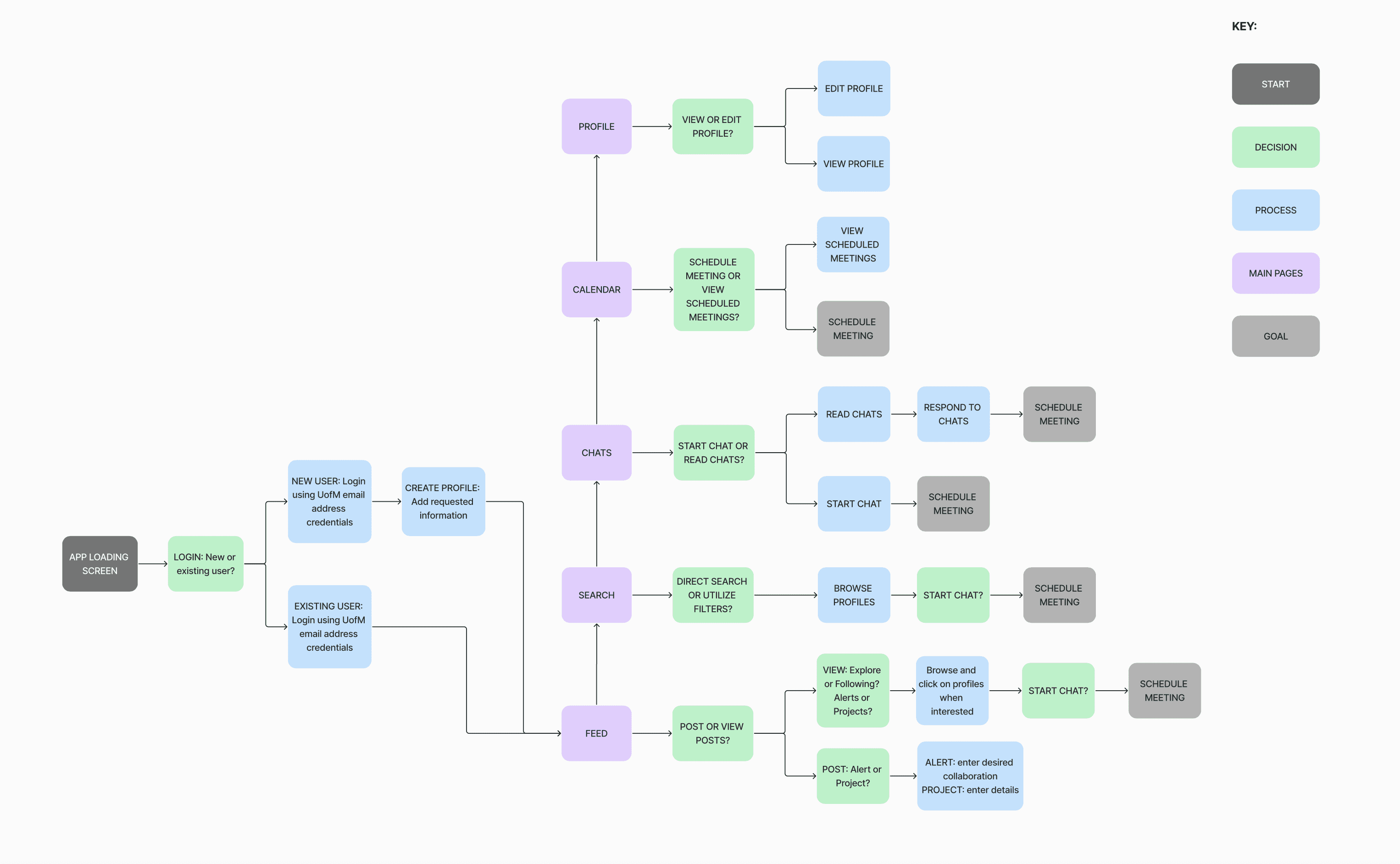
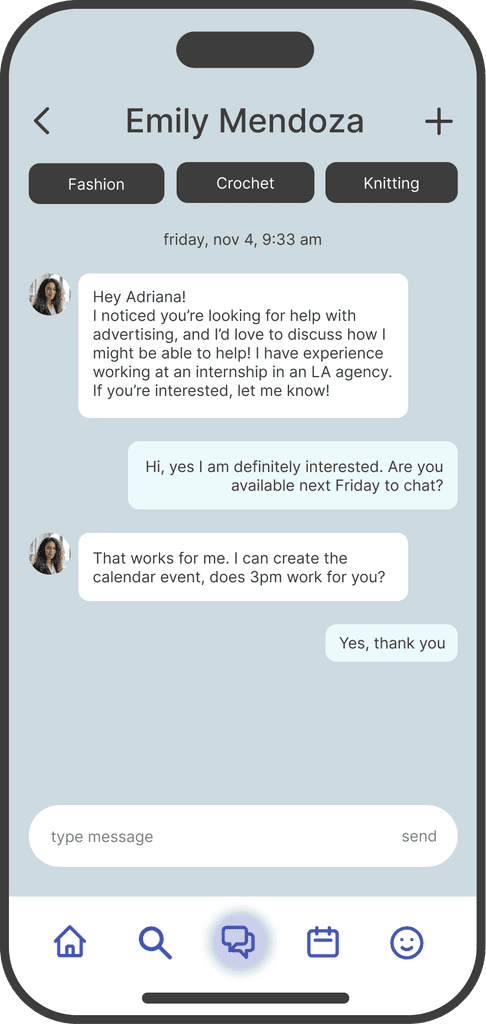
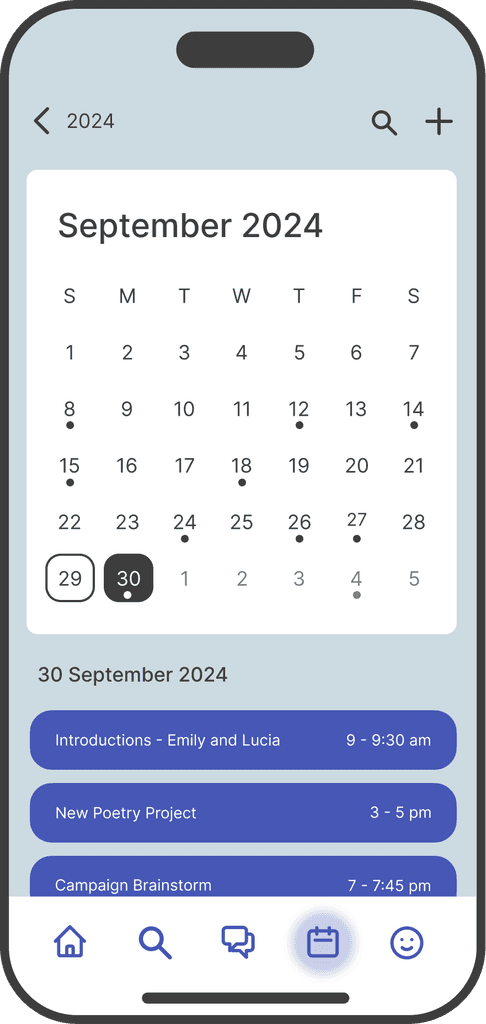
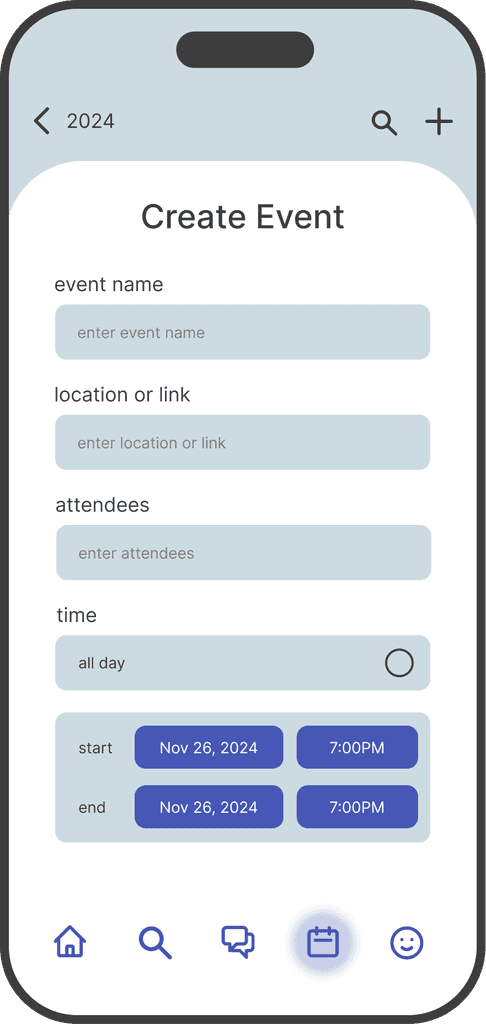
The user flow highlights all possible paths to the app’s core goal: scheduling a meeting with another creative.
Low Fidelity
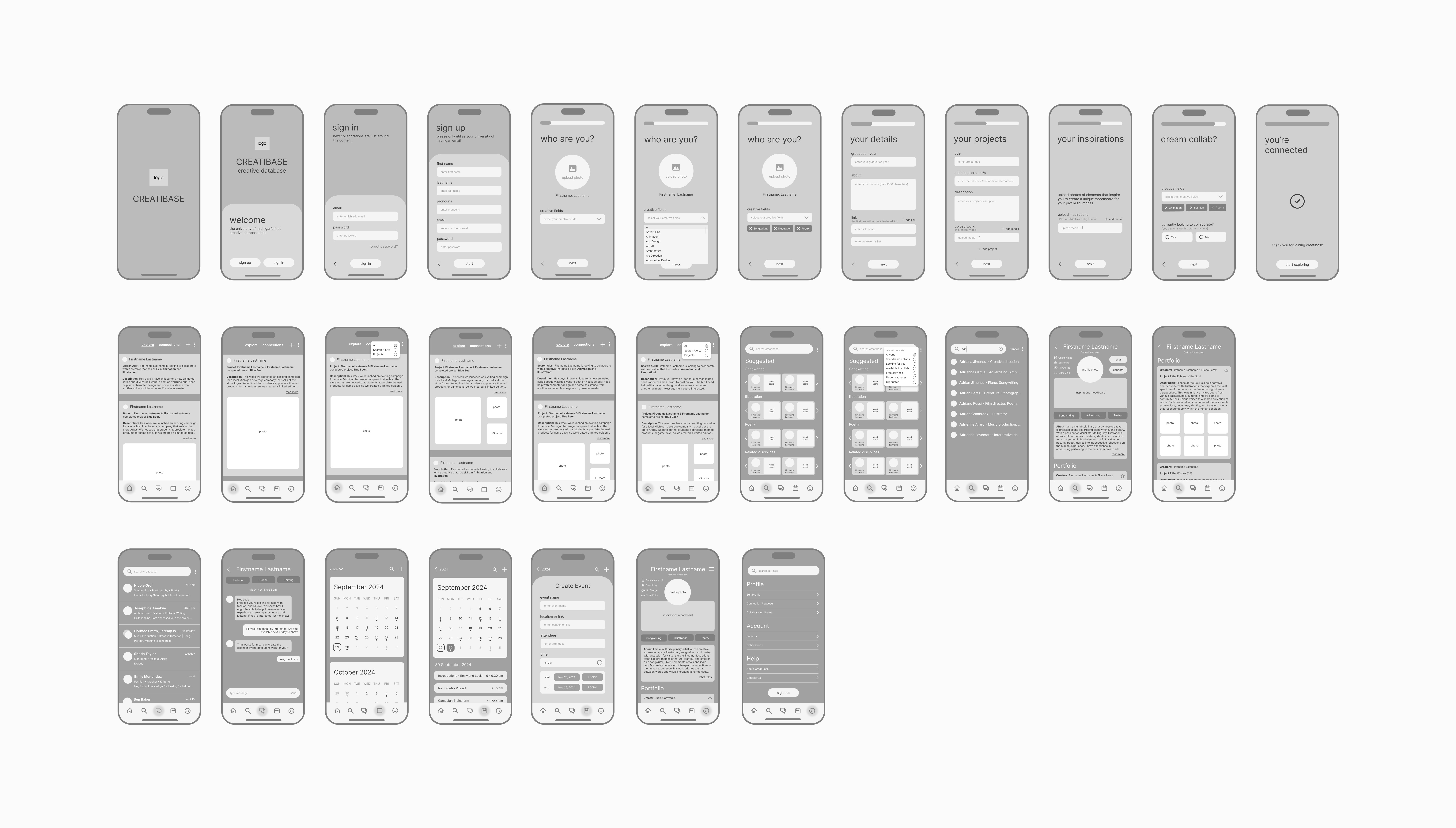
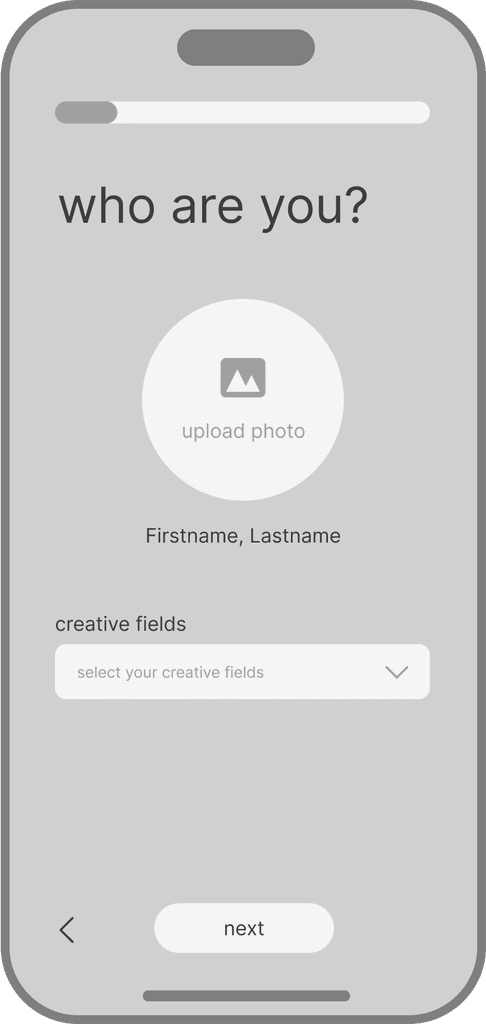
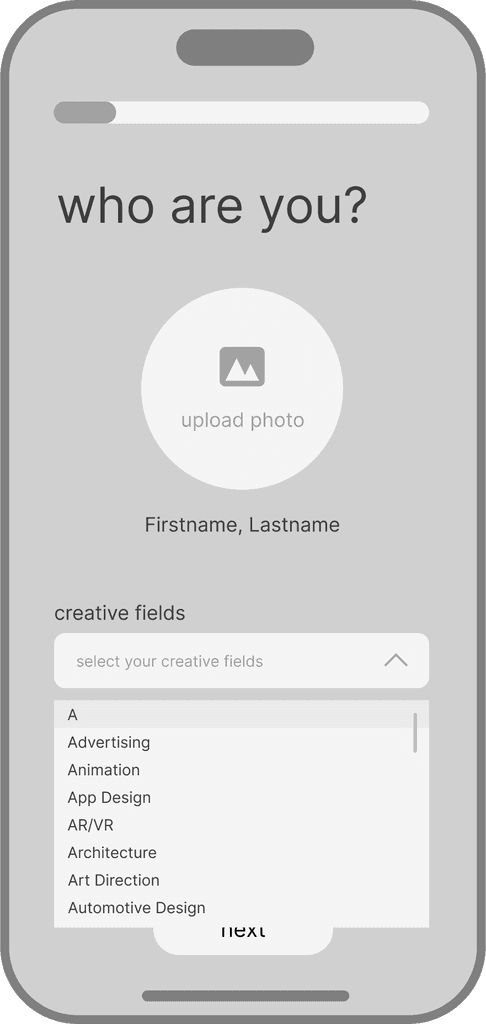
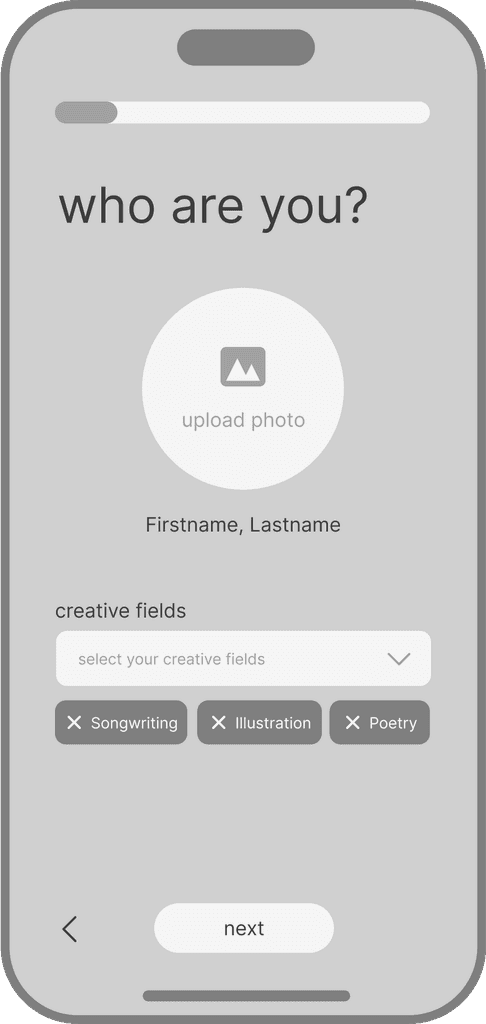
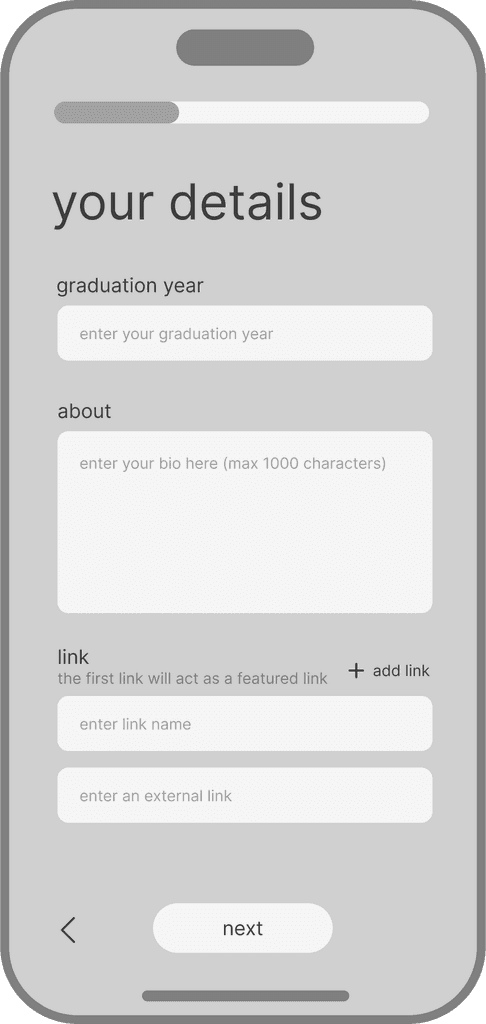
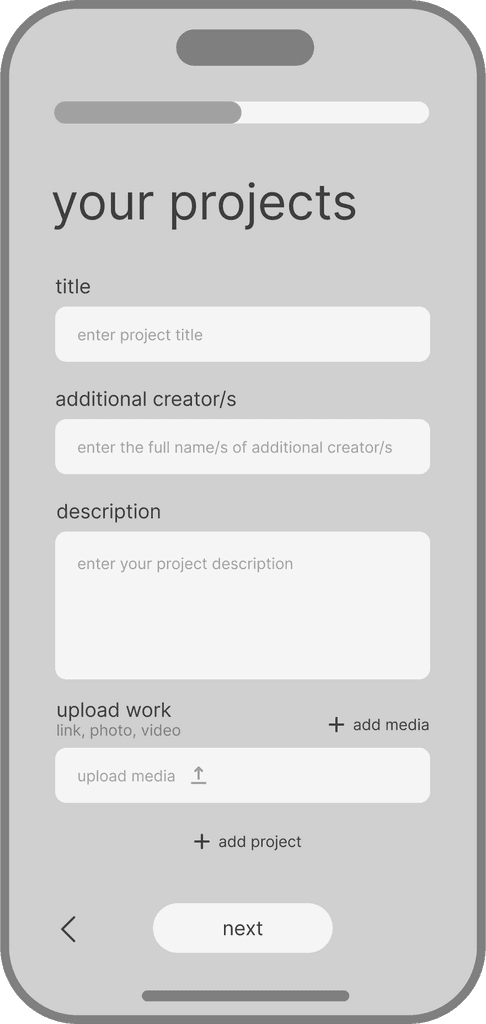
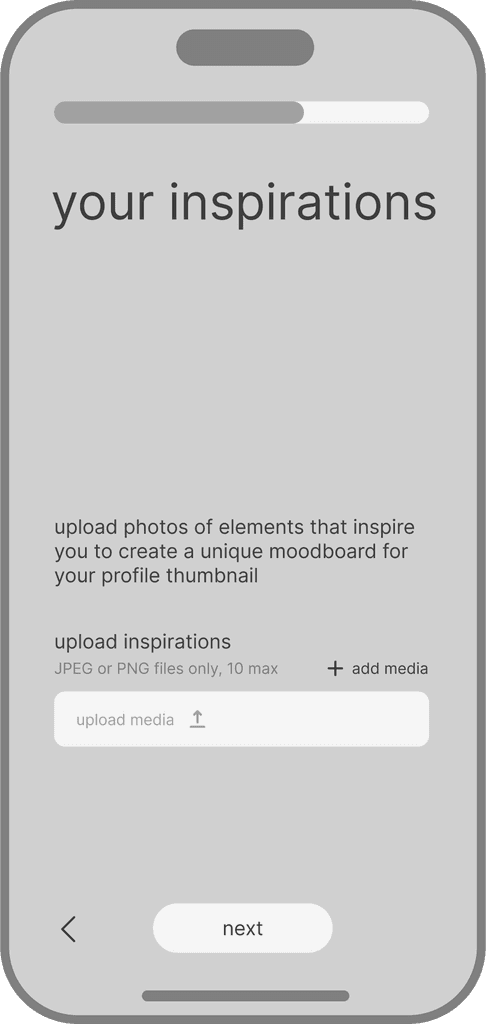
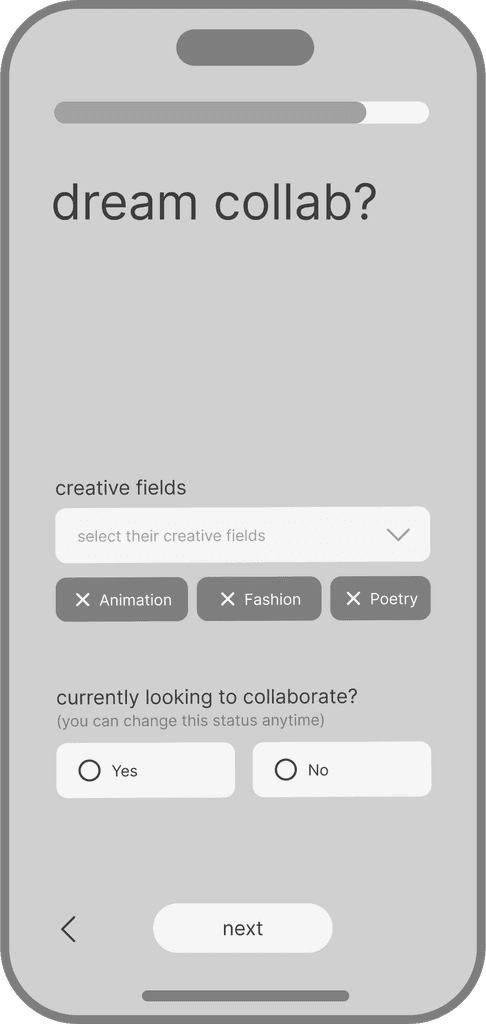
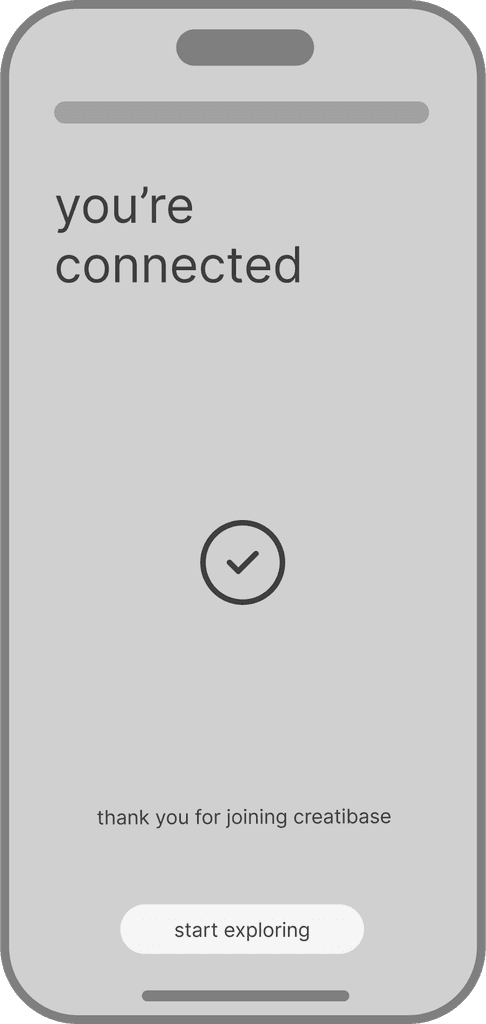
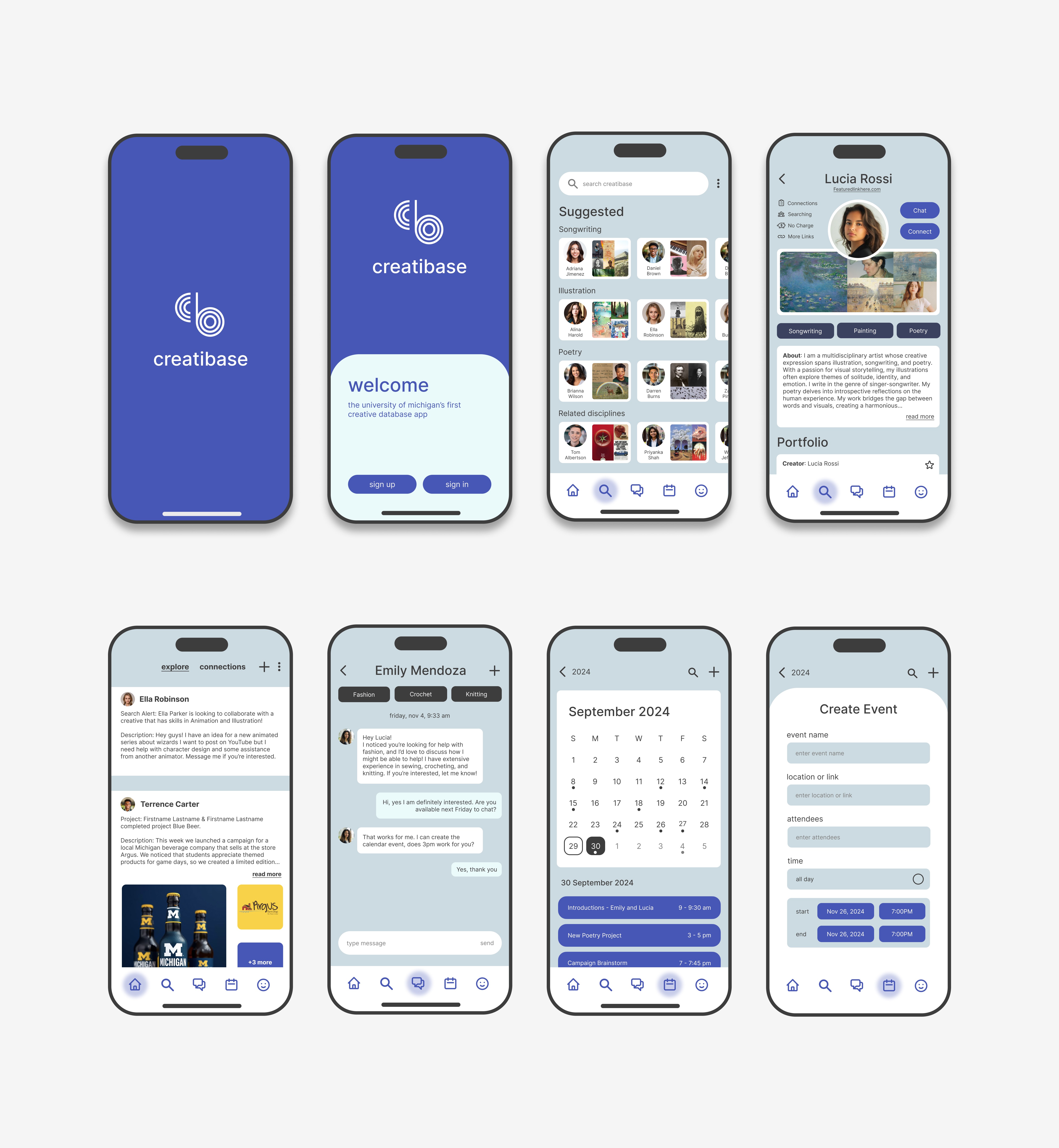
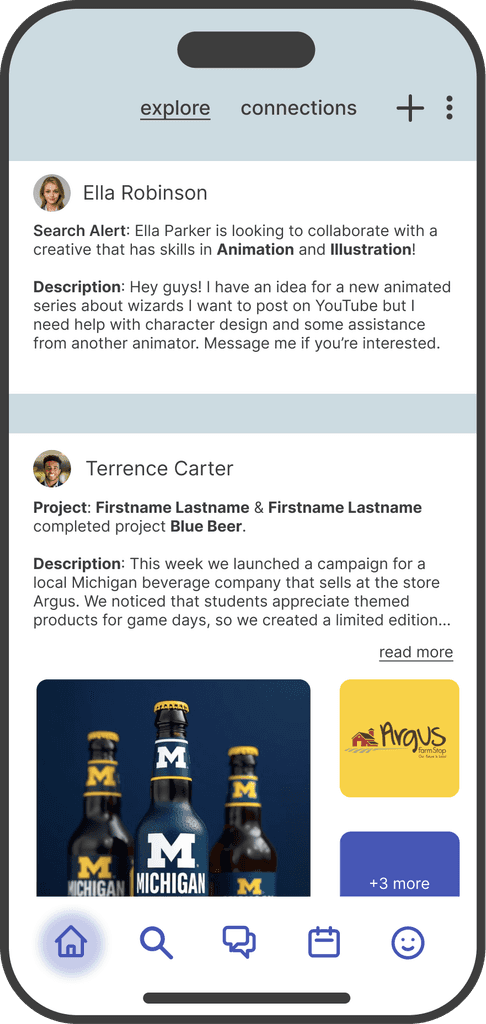
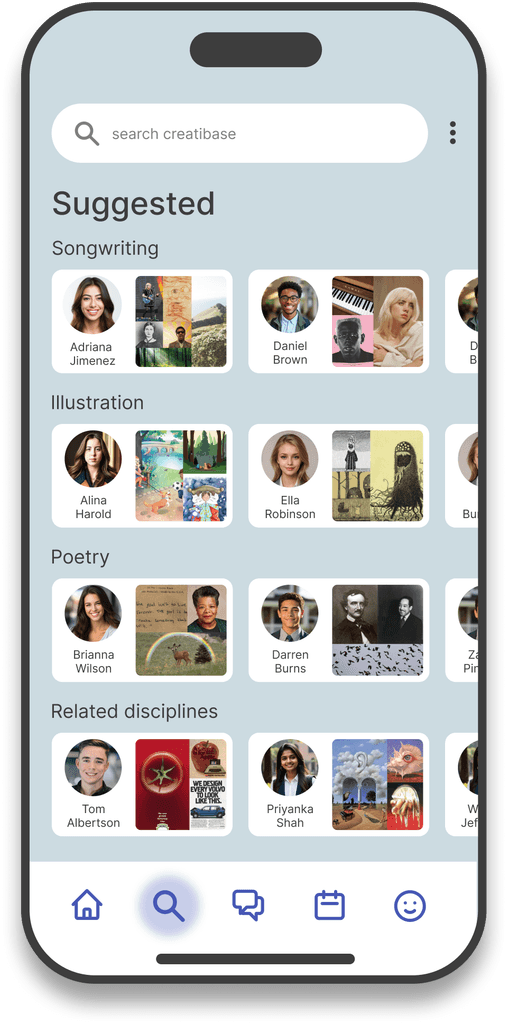
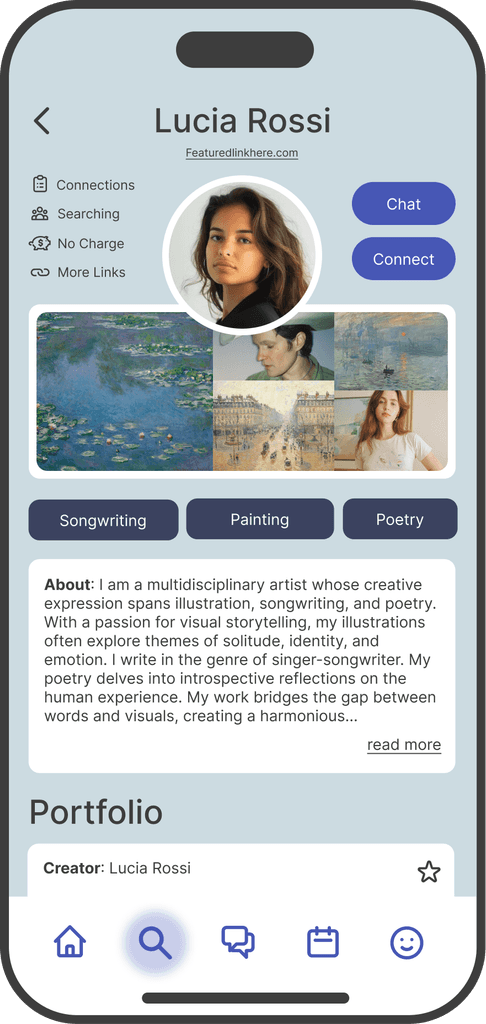
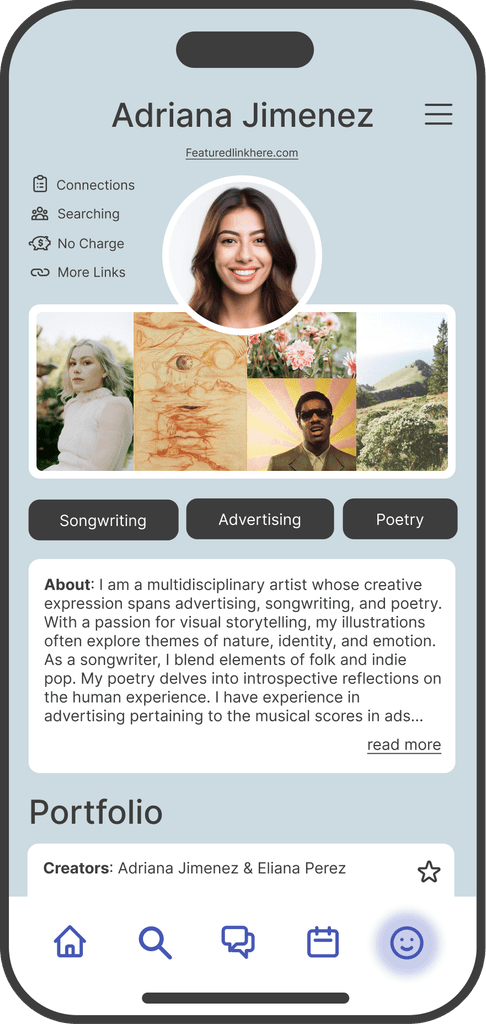
Based on survey and interview feedback, I designed a customizable, curated, and intuitive app for creatives. To enhance usability, I incorporated familiar layouts and features from apps like Instagram and LinkedIn.
Feedback and Changes
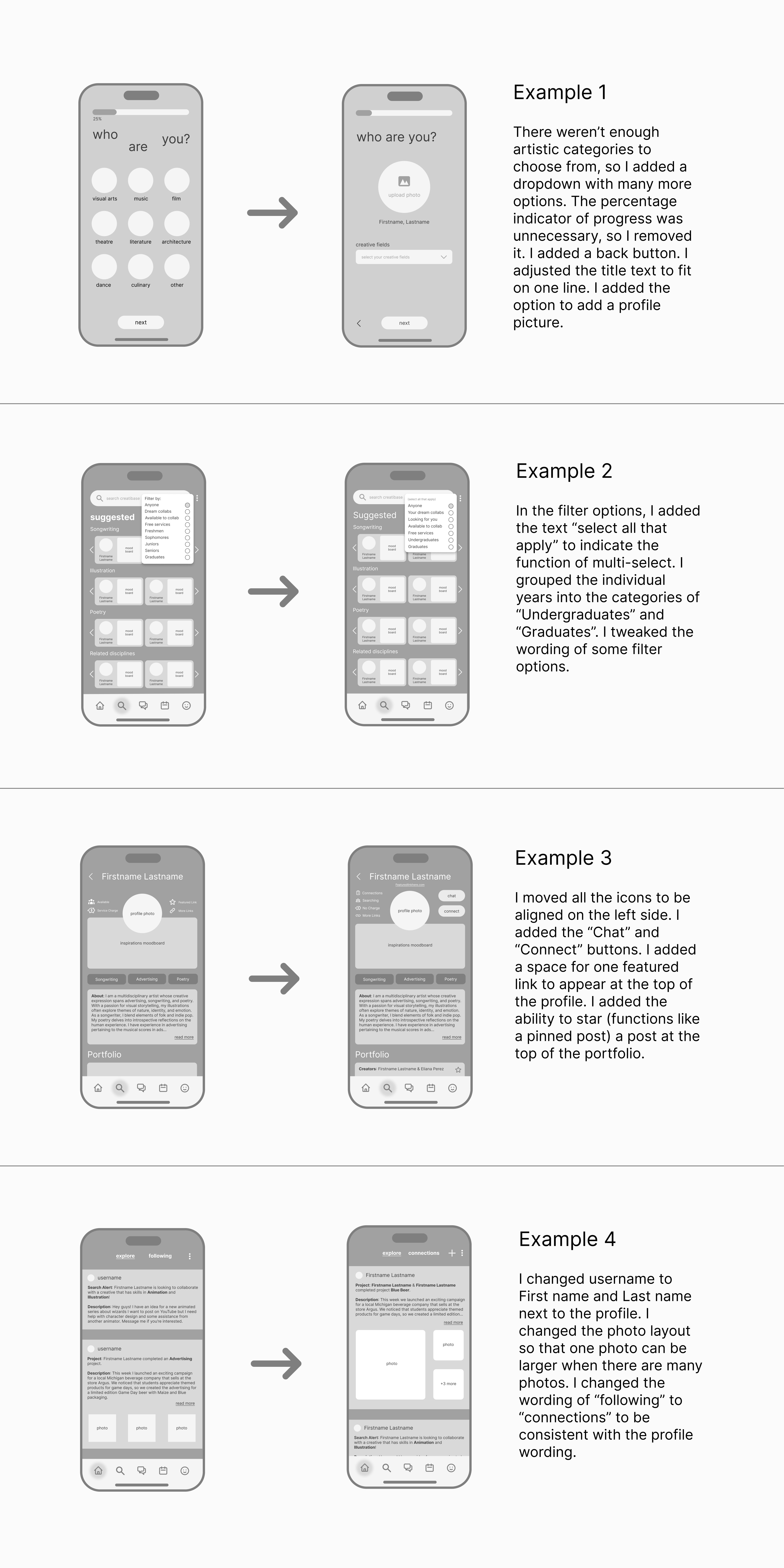
After presenting low-fidelity mockups to participants, I made several design improvements based on their feedback. Challenges included rethinking creative label category options and profile page structure.
Design System
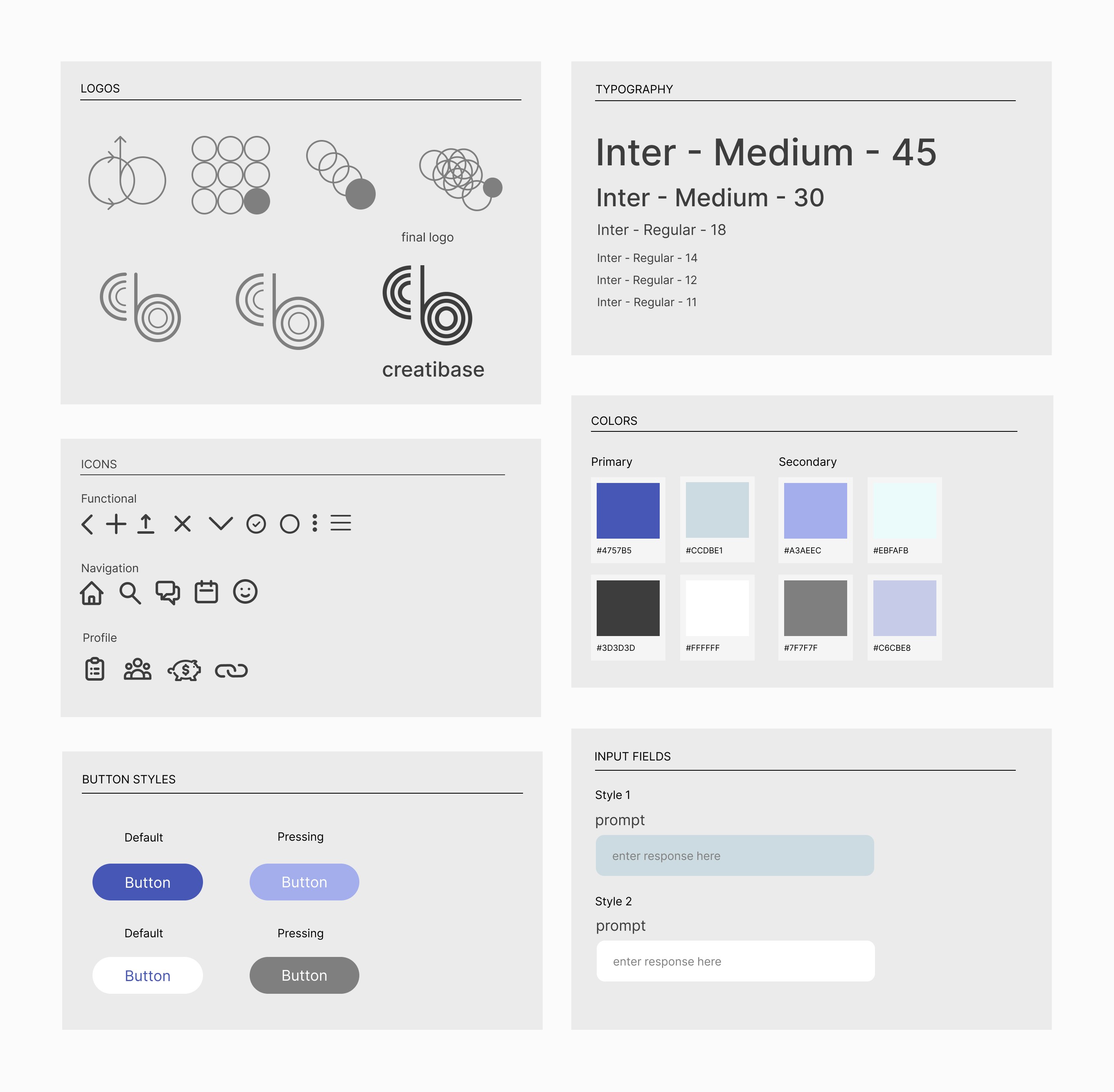
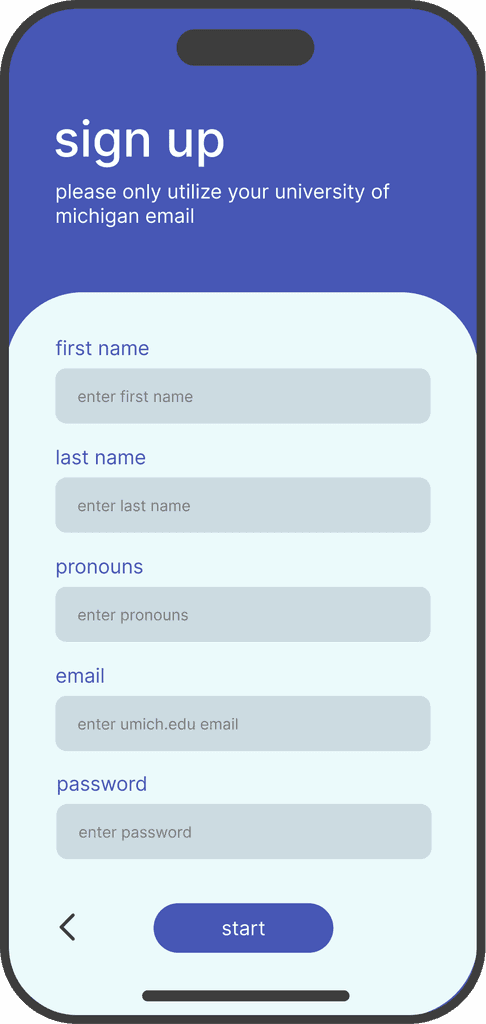
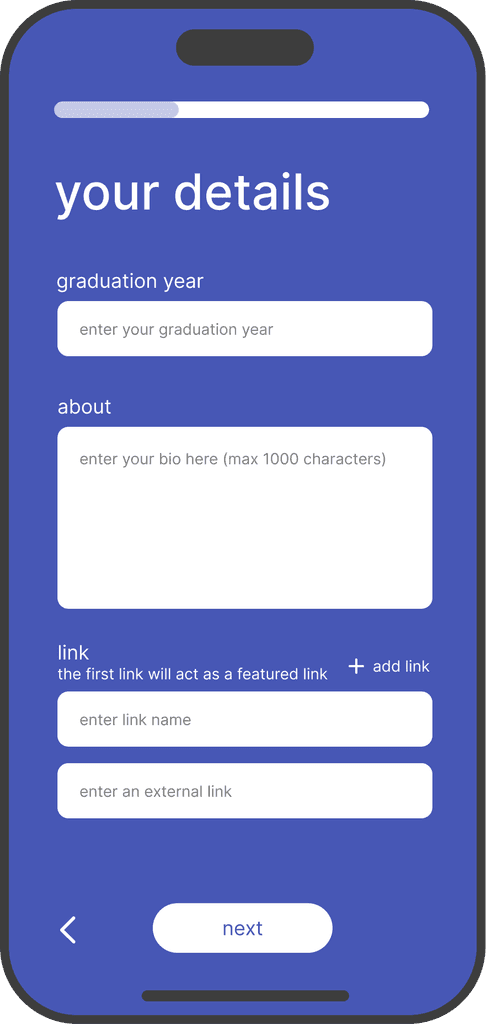
Before creating high-fidelity mockups, I developed a design system.
Takeaways
Defining a problem, who it is affecting, and how it is affecting them is important: many creatives at universities have limited networking resources to connect with like-minded creatives. Competitive analysis in addition to interview questions regarding competitors is useful to pick out pain points and features to avoid.
Next Steps
When it comes to further improving this experience some next steps would be: allow users to connect their Google or Apple calendars to the calendar in the app, offer more ways to customize the profile, and potentially implement a post commenting feature. I would also explore scaling this app for different universities. To gauge success metrics if this were a functional app, I would compare the ratio of connections made to the meetings created.